Why Scammers Prefer Cloned Firms Over Fake Company Names
Published: March 8, 2026 · Updated: March 9, 2026
Contents
Full Guide
This is the era of the Cloned Firm—a sophisticated evolution of identity theft where fraudsters impersonate legitimate, regulated financial services businesses.
While fake company names still exist, they are increasingly being abandoned in favor of clones. Here is a deep dive into why scammers prefer the "stolen suit" of a real firm over the "imaginary friend" of a fake name.
The Weaponization of Pre-Existing Trust
The hardest part of any sale—legitimate or otherwise—is establishing trust.
When a scammer creates a fake company like "GoldStar Investments," they start with zero brand equity. They have to convince the victim that the company is real, stable, and reputable. In contrast, a cloned firm piggybacks on decades of marketing, history, and consumer confidence.
The Halo Effect: If a victim sees the logo of a firm they recognize from the news or their local high street, their defensive walls drop.
The "Lindy Effect": We tend to trust things that have been around a long time. Scammers "borrow" this longevity by claiming to be a branch or a specific broker from an established institution.
Cloned vs. Fake
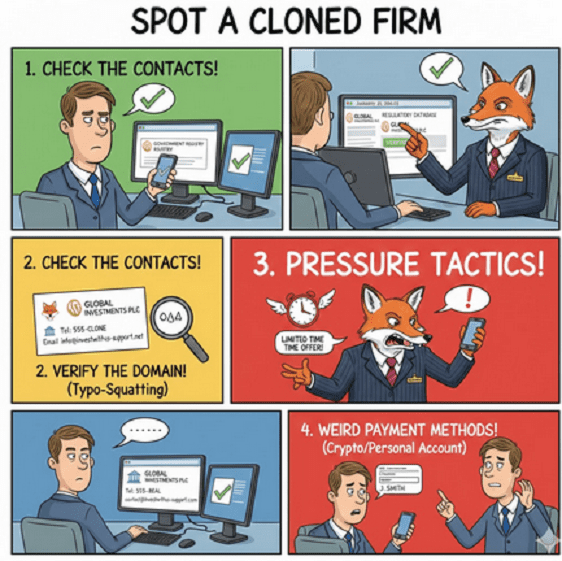
Today’s consumers are savvy. If they receive a suspicious cold call, their first instinct is to search for the company on a regulatory database, such as the FCA (UK), SEC (USA), or ASIC (Australia).
The Fake Name Trap: If a user searches for "FakeWealth Inc." on a regulatory register and finds nothing, the scam ends immediately.
The Clone Strategy: When the victim searches for the firm name provided by a cloner, they find a perfect match. They see a legitimate registration number, a real head office address, and a list of authorized activities.
The scammer simply claims, "Yes, that's us! You can see we're fully regulated on the government website." By the time the victim realizes the contact details (phone number or email) don't match the register, the money is usually gone.
Psychological "Cognitive Ease"
Human brains are wired to take shortcuts. This is known as Cognitive Ease. It is much easier for a victim to process a familiar name than a new one.
| Element | Fake Company Name | Cloned Firm |
| Brand Recognition | Zero. Requires heavy explanation. | High. Requires no introduction. |
| Initial Friction | High. Victim is naturally skeptical. | Low. Victim feels "safe" with a known brand. |
| Verification | Fails immediately on official sites. | Appears to pass official checks. |
| Email Credibility | [email protected] (Looks fishy) | [email protected] (Looks official) |