How Law Firms Can Protect Themselves From Website Cloning
Summary
Contents
Filed under: Law Firm Clone
Full Analysis
What Is This Scam?
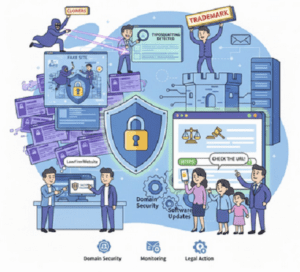
Website cloning is a sophisticated fraud scheme in which scammers create unauthorized copies of legitimate law firm websites. These fraudulent sites are designed to closely mimic the appearance, layout, and content of authentic legal practices, deceiving potential clients into believing they are contacting a real law firm. The scammers use these cloned websites to solicit payments for legal services that are never provided, steal sensitive personal and financial information from victims, or facilitate additional fraud schemes. This type of scam primarily targets individuals seeking legal representation who may not verify the authenticity of the firm before engaging their services or sharing confidential information.
Who Are They Impersonating?
Website cloning scams target law firms across multiple practice areas and jurisdictions. Rather than impersonating a single specific firm, these scams employ a broad strategy of duplicating various legitimate law firm websites to cast a wide net for potential victims. The scammers copy established firms' branding, attorney names, contact information, and service descriptions to create convincing replicas. Victims may unknowingly contact these fraudulent sites when searching for legal services online, making it difficult for consumers to distinguish between legitimate legal practices and criminal impersonations.
Evidence & Regulatory Action
Information regarding website cloning threats to law firms has been documented by fraud prevention resources. The Cloned Firm Registry provides detailed guidance on how law firms can protect themselves from website cloning, indicating that this is a recognized and documented threat within the legal industry. The registry addresses protective measures including domain security fortification and robust hosting implementations, demonstrating that regulatory and industry bodies are actively tracking this fraud trend and providing resources to help law firms defend against these attacks.
Red Flags
- Website URL that is slightly different from the official firm domain (using hyphens, numbers, or slight spelling variations)
- Poor quality graphics, outdated website design, or inconsistent branding with the legitimate firm
- Attorney photographs or biographical information that cannot be verified through independent searches
- Requests for payment via wire transfer, cryptocurrency, or prepayment before services are rendered
- Communication exclusively through email or messaging platforms rather than official phone numbers
- Spelling and grammatical errors in website content or email communications
- Inability to verify the firm's physical office address or licensing credentials through state bar associations
- Requests for sensitive personal information earlier in the process than standard legal intake would require
What To Do If You Have Been Contacted
- Independently verify the law firm's legitimacy by contacting the state bar association directly using contact information from the official state bar website
- Request the attorney's bar license number and cross-reference it with your state's bar directory
- Do not provide payment or personal information until you have confirmed the firm's authenticity through independent verification
- Compare the website URL and contact information with any previous correspondence or business cards from the legitimate firm
- If you have already shared personal or financial information, contact your bank and credit card companies immediately to report potential fraud
- Document all communications and report the fraudulent website to the state bar association and the Federal Trade Commission
- File a complaint with local law enforcement if financial loss has occurred