Why Clone Firm Sites Always Slip on Fonts Spacing and Branding Details
Published: March 26, 2026
Contents
Full Guide
How Visual Details Betray Clone Firm Websites
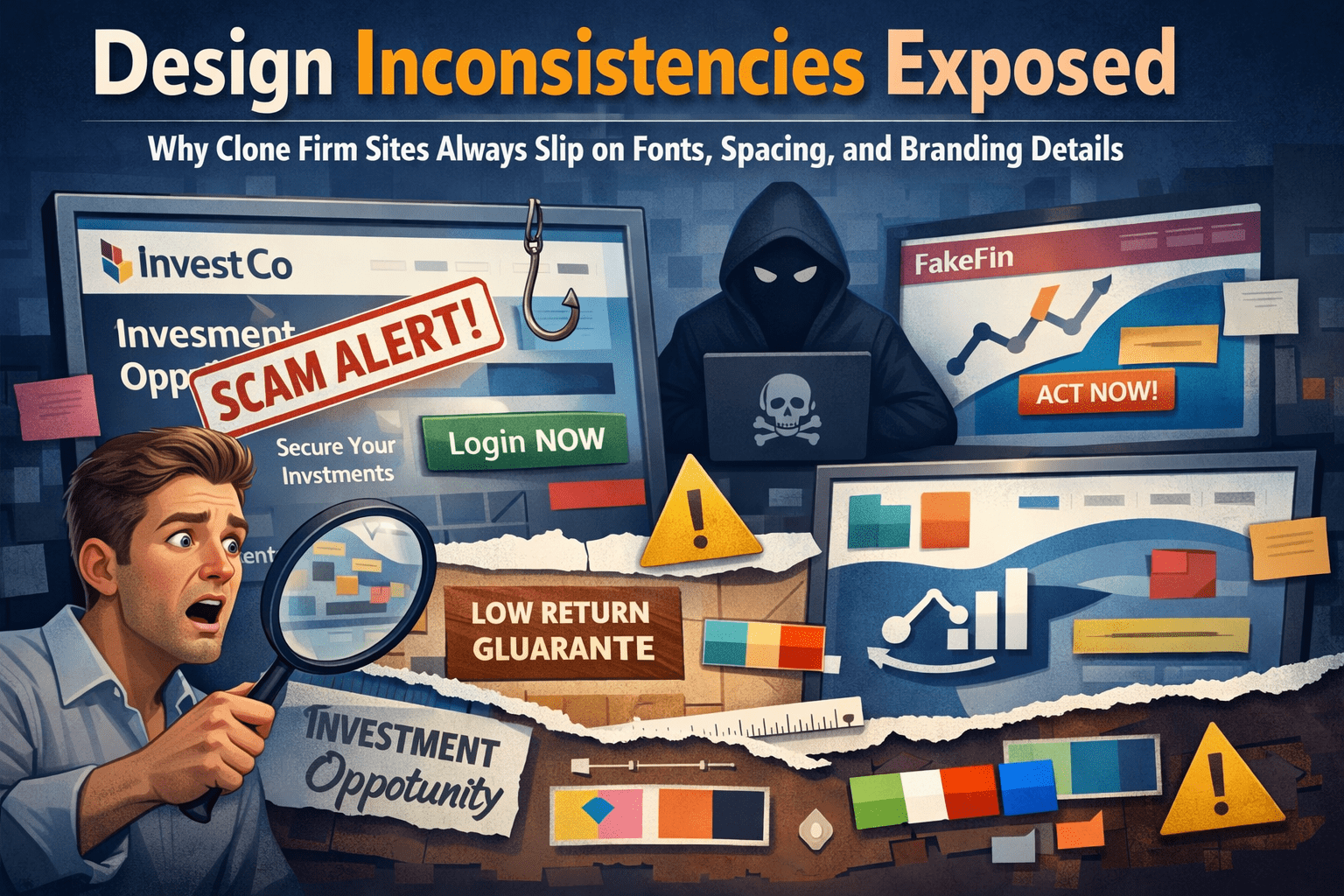
When fraudsters build a clone firm website, their primary goal is speed. They need a convincing replica of a legitimate financial firm's online presence, and they need it quickly before the scam is detected. That urgency leaves visible traces — and those traces often appear in the most overlooked corners of web design: typography, spacing, and brand consistency.
Understanding how to spot these visual inconsistencies is one of the most practical skills a consumer can develop when verifying whether a financial services firm is genuine or fraudulent.
Why Clone Sites Struggle with Consistent Design
Legitimate financial firms invest significantly in brand identity. Their websites are built and maintained by professional design teams who enforce strict style guides covering font families, colour palettes, spacing ratios, and logo usage. These guidelines are applied consistently across every page, document, and communication.
Clone fraudsters, by contrast, typically copy content piecemeal — screenshotting logos, copy-pasting text, and downloading images from the real firm's website. The result is an assembly of borrowed parts that never quite fits together the way a professionally built site does.
Common Design Red Flags to Watch For
Font Inconsistencies
One of the most telling signs of a cloned site is mixed typography. You may notice that headings appear in a different font style to body text, or that the same type of content uses different font sizes across different pages. Sometimes a cloned site will use a generic system font — such as Arial or Times New Roman — in places where the legitimate firm uses a licensed custom or web font. Look also for text that appears slightly blurred or pixelated, which often indicates it was copied as an image rather than typeset directly.
Spacing and Layout Problems
Professional websites maintain consistent margins, padding, and line spacing throughout. On clone sites, you will frequently encounter irregular gaps between sections, text that runs too close to the edge of a container, or content that appears misaligned on different screen sizes. Buttons may not sit centrally within their frames, and columns may appear uneven. These are signs that the layout was assembled without access to the original design files or a coherent stylesheet.
Logo and Branding Errors
- Logos that appear stretched, pixelated, or slightly off-colour compared to the firm's official materials
- Inconsistent use of the firm's registered trademark symbols
- Colour shades that are close to but not quite the correct brand colours — a navy that is slightly too dark, or a gold that reads as yellow
- Multiple versions of the same logo appearing across different pages, suggesting assets were gathered from various sources
- Favicons (the small icon in the browser tab) that are missing, generic, or do not match the firm's brand
Document and Material Quality
Clone firms often provide downloadable documents — prospectuses, terms and conditions, or account opening forms — that betray the same inconsistencies. Watch for watermarks that have been poorly removed, headers and footers that use different fonts to the rest of the document, or regulatory disclosure text that has been copied from a different jurisdiction and not updated.
Comparing Against the Real Firm
If you have any doubt about a firm contacting you, visit the genuine company's website directly using an address sourced from a trusted financial regulator's register — not a link provided in any communication you received. Compare the two sites side by side. Pay close attention to font choices, button styles, colour usage, and the overall visual weight of the page. Subtle differences that might be easy to dismiss individually become much more apparent when viewed alongside the authentic version.
What to Do If You Suspect a Clone Site
If you believe you have encountered a cloned firm, do not provide any personal information, transfer any funds, or engage further with the contact. Report the site to your national financial regulator, as most operate dedicated scam reporting portals. You should also report the fraudulent website to the relevant internet domain registrar and to your country's national cybercrime reporting service. If you have already shared financial or personal details, contact your bank immediately and request guidance on protecting your accounts.
Visual scrutiny is not a foolproof defence on its own, but training yourself to notice design inconsistencies adds a meaningful layer of protection against one of the most sophisticated forms of financial fraud in operation today.