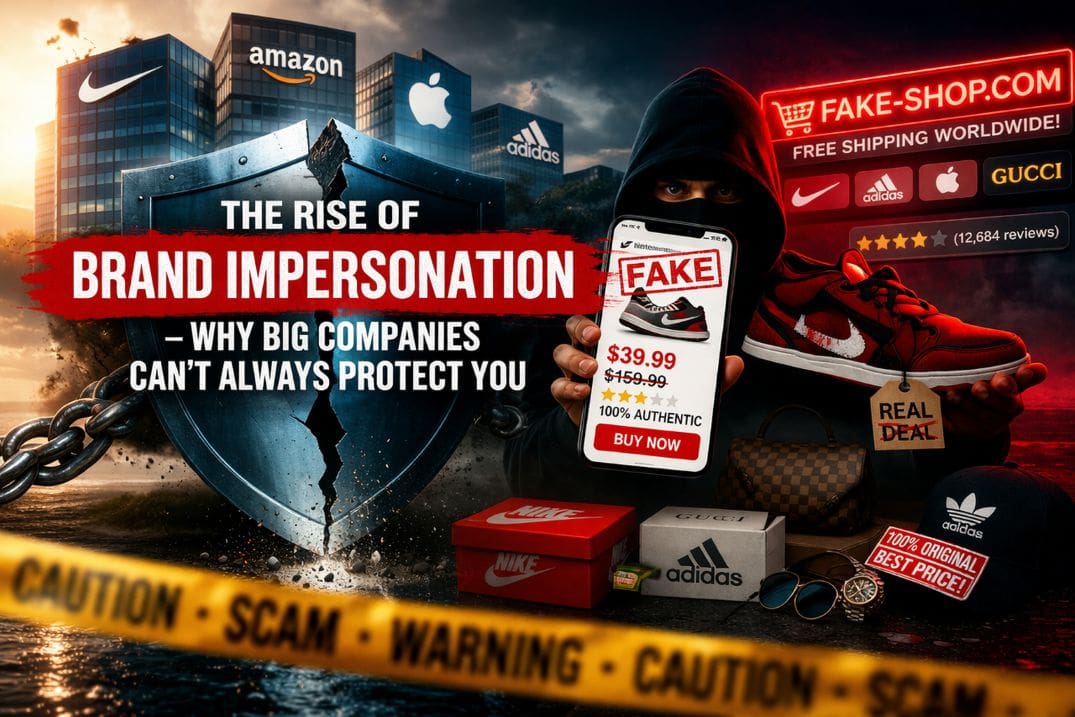
The Rise of Brand Impersonation – Why Big Companies Can’t Always Protect You
Published: March 26, 2026
Contents
Full Guide
How Scammers Exploit Trusted Brand Names
When a message arrives appearing to come from Amazon, HMRC, or your bank, your instinct is often to trust it. Scammers know this, and they exploit it ruthlessly. Brand impersonation — where fraudsters clone the identity of a legitimate, well-known organisation — has become one of the most widespread and damaging forms of consumer fraud operating today.
The scale of the problem is significant. Fraudsters replicate logos, email templates, website designs, and even customer service scripts with alarming accuracy. For the average consumer, distinguishing a genuine communication from a convincing fake has never been more difficult.
Why Big Companies Cannot Fully Protect You
Many consumers assume that large corporations have the resources and legal power to shut down impersonators quickly. While major brands do invest heavily in anti-fraud measures, the reality is that they face fundamental limitations in protecting individual consumers from impersonation scams.
- Scammers operate internationally: Fraudulent operations are frequently run from jurisdictions where enforcement is slow, difficult, or practically impossible.
- New fakes appear faster than old ones are removed: A single enforcement action against one fraudulent website rarely prevents another from appearing within days.
- Email spoofing is technically difficult to eliminate entirely: While protocols like DMARC help, determined fraudsters continue to find workarounds that make emails appear legitimate.
- Social media impersonation is rampant: Fake profiles mimicking well-known brands can be created in minutes and may reach thousands of users before being reported and removed.
In short, the burden of protection cannot rest entirely with the companies being impersonated. Consumers must also equip themselves with the knowledge to identify and avoid these scams.
Common Warning Signs of Brand Impersonation
Recognising the hallmarks of a cloned brand communication can make a critical difference. Be alert to the following red flags:
- Urgent or threatening language: Messages claiming your account will be suspended, a parcel cannot be delivered, or a fine is outstanding unless you act immediately are designed to bypass your critical thinking.
- Mismatched or slightly altered sender addresses: A legitimate company will always communicate from its official domain. Look carefully — fraudsters often use addresses such as amazon-support.net or hmrc-refunds.co.uk rather than the genuine domain.
- Requests for sensitive information: Genuine organisations will never ask you to confirm passwords, full card numbers, or PINs via email, text, or an unsolicited phone call.
- Poor grammar or unusual formatting: While sophisticated scams are increasingly well-written, inconsistencies in language, spacing, or layout can still reveal a fake.
- Links that do not match the official website: Always hover over hyperlinks before clicking. If the URL looks unusual or unfamiliar, do not proceed.
Industries Most Frequently Targeted by Impersonators
While no sector is immune, certain industries are disproportionately impersonated due to their high consumer trust and widespread usage:
- Banking and financial services
- Government agencies and tax authorities
- Parcel delivery and logistics companies
- Online retail and subscription platforms
- Telecommunications providers
- Investment and cryptocurrency platforms
If you receive an unexpected communication from any organisation in these categories, treat it with heightened caution regardless of how authentic it appears.
What to Do If You Suspect Brand Impersonation
If you believe you have been targeted by a scam impersonating a legitimate brand, take the following steps promptly:
- Do not click any links or call any numbers provided in the message. Instead, navigate directly to the official website by typing the address manually into your browser.
- Contact the organisation directly using contact details found on their official website to verify whether the communication is genuine.
- Report the scam to the relevant authority — in the UK, this includes Action Fraud (actionfraud.police.uk) and the National Cyber Security Centre (NCSC). You can also forward suspicious emails to [email protected].
- If you have already provided personal or financial information, contact your bank immediately and change any affected passwords.
- Warn others by reporting fake profiles or websites to the platform or search engine hosting them.
Staying Ahead of the Impersonators
Brand impersonation is not a problem that will be solved by corporations or regulators alone. Consumer awareness remains the single most effective line of defence. Treat unsolicited communications with scepticism, verify before you act, and remember that legitimate organisations will never pressure you into making instant decisions. Taking a moment to pause and question could be the step that protects your finances and personal data.