How to Use Search Engines to Identify Verified Official Brand Websites
Published: March 12, 2026
Contents
Full Guide
Why Verifying a Brand's Official Website Matters
Scammers routinely create counterfeit websites that closely mimic legitimate brands. These cloned or spoofed sites are designed to steal personal information, harvest payment details, or trick consumers into purchasing non-existent products. Before you interact with any website claiming to represent a known company, it is worth taking a few deliberate steps to confirm you are in the right place. Search engines, used correctly, are one of your most powerful tools for doing exactly that.
How to Search for a Brand's Official Website Safely
Not all search results are equal, and scammers do invest in paid advertising to push fraudulent sites to the top of results pages. Follow these steps to improve your chances of locating the genuine source.
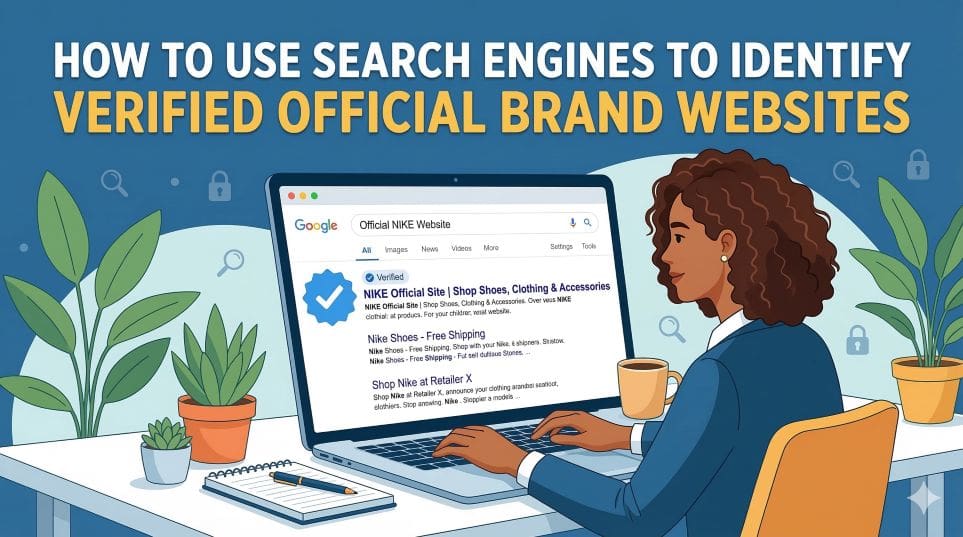
Start With a Precise, Specific Search Query
Instead of searching for a generic term like a product name, search for the full official brand name alongside words such as "official website", "head office", or "customer service". This reduces the likelihood of landing on affiliate pages, mirror sites, or spoofed domains that prey on vague searches.
Look Beyond Paid Advertisements
Paid search advertisements appear at the very top of results pages and are labelled with a small "Sponsored" tag. While many legitimate brands do advertise this way, fraudulent operators also purchase these slots to intercept consumers. Scroll past the sponsored listings and examine the organic results beneath them, which are harder to manipulate and more reliably associated with established brands.
Check the Domain Carefully in the Search Results
Before clicking any link, hover over it or examine the URL displayed beneath the page title in the search results. Scam websites often use domain names that are subtly altered versions of the real thing. Common tricks include adding hyphens, swapping letters, appending words like "official", "support", or "help", or using different top-level domain extensions such as .net or .org when the genuine site uses .com.
Use the Brand's Own Social Media Profiles as a Cross-Reference
Most established brands maintain verified social media accounts on platforms such as LinkedIn, X (formerly Twitter), Facebook, and Instagram. These profiles typically link directly to the official website in their bios or about sections. Navigating to the website via a verified social media profile gives you an additional layer of confirmation.
Red Flags to Watch for in Search Results
- Websites with domain names that contain additional words or characters around the brand name, such as "brandname-support-uk.com"
- Results with no clear connection to the brand's country of registration or known operating regions
- Pages with poor grammar or unusual formatting visible even in the search result snippet
- Sites that appear in results but have no established web presence, reviews, or recognisable history
- Multiple similar-looking domains appearing in the same search results page — this can indicate a network of clone sites
Cross-Checking Against Official Regulatory Sources
For financial services firms, investment companies, and regulated businesses, you should always verify the website address against entries held on official regulatory registers. In the United Kingdom, the Financial Conduct Authority (FCA) maintains a public register at fca.org.uk where you can confirm the exact website address associated with an authorised firm. Databases such as the Cloned Firm Registry provide additional records of known fraudulent firms using the identities of legitimate businesses. Cross-referencing a website address against these sources takes only moments and can prevent significant harm.
Use WHOIS Lookup Tools as a Secondary Check
WHOIS lookup tools, available through providers such as who.is or lookup.icann.org, allow you to see basic registration information about any domain name. A recently registered domain, particularly one created within the past few months, combined with hidden registrant details, should raise immediate concern if the website is claiming to represent a long-established brand.
What to Do If You Suspect You Have Found a Fraudulent Website
If a website raises doubts, do not enter any personal information, make any payment, or call any telephone number displayed on the page. Report the suspicious site to your national consumer protection authority. In the UK, this means Action Fraud at actionfraud.police.uk. You can also report cloned firm websites directly to the FCA using their online reporting tool. If you have already provided information or made a payment, contact your bank immediately to report potential fraud and request that any transactions be blocked or reversed.