What is a Mirror Website? Understanding the Mechanics of Online Impersonation
Published: March 26, 2026
Contents
Full Guide
How Fraudsters Use Mirror Websites to Steal Your Money
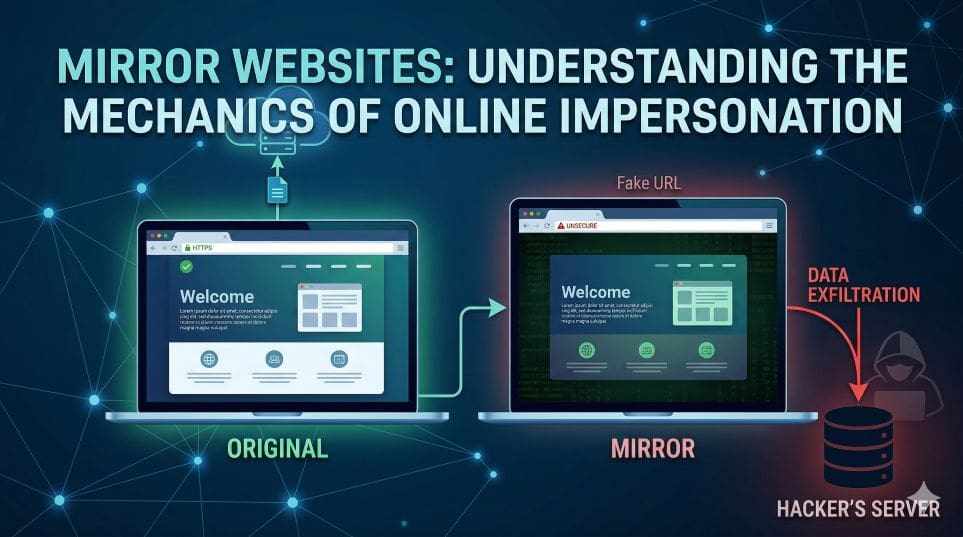
A mirror website is a near-identical copy of a legitimate organisation's online presence, built by fraudsters to deceive consumers into believing they are dealing with a trusted, authorised entity. These fake sites replicate the branding, layout, content, and even the regulatory credentials of real companies — most commonly financial services firms, investment platforms, and government-regulated businesses. Understanding how these sites work is one of the most effective ways to protect yourself from financial fraud.
What Exactly Is a Mirror Website?
In the context of online fraud, a mirror website is a cloned version of a genuine firm's website. Unlike a hastily assembled phishing page, a well-crafted mirror site may be virtually indistinguishable from the original at first glance. Fraudsters invest significant effort into copying logos, colour schemes, staff profiles, legal disclaimers, and even fake regulatory reference numbers to create an illusion of legitimacy.
These sites are typically used as part of a broader scam strategy known as a cloned firm scam. The criminals behind them pose as employees of the legitimate firm and direct victims to the mirror website as apparent proof of their identity and credentials. Once trust is established, victims are persuaded to transfer money — often losing substantial sums before the deception is uncovered.
How Mirror Websites Are Constructed
Building a mirror website requires relatively little technical skill. Freely available tools can copy the entire visible content of a legitimate site within minutes. Fraudsters then make targeted modifications, such as replacing genuine contact details with their own phone numbers or email addresses, while leaving everything else intact to preserve authenticity.
Common technical features of fraudulent mirror sites include:
- A domain name closely resembling the legitimate firm's URL, often using slight misspellings, added hyphens, or different suffixes (for example, .net instead of .co.uk)
- Copied regulatory information, such as FCA registration numbers, displayed prominently but linked to fraudulent contact channels
- SSL certificates (the padlock icon in your browser), which many consumers mistakenly believe guarantee a site is genuine
- Functional-looking contact forms and live chat features that connect directly to the scammers
Red Flags to Watch For
Identifying a mirror website requires careful attention to detail. The following warning signs should prompt you to stop and verify before taking any further action:
- Unfamiliar domain name: Even small variations in a web address — a single extra letter, a different suffix, or an added word — can indicate a cloned site.
- Unsolicited approach: If you were contacted out of the blue via phone, email, or social media and then directed to a website, treat this as a serious warning sign.
- Pressure to act quickly: Legitimate firms do not pressure clients into urgent financial decisions. Urgency is a hallmark of fraud.
- Discrepancies in contact details: Cross-reference any phone numbers or email addresses on the site against those listed on the regulator's official register.
- Requests for unusual payment methods: Requests to transfer funds via cryptocurrency, overseas bank accounts, or unconventional payment apps are strong indicators of fraud.
How to Verify a Website's Legitimacy
Before engaging with any financial services website — particularly one you have been directed to rather than found independently — take the following steps:
- Visit your national financial regulator's website directly (such as the FCA in the UK or the SEC in the US) and use their official firm search tool to verify the company's registration details.
- Independently search for the firm's website rather than relying on links provided by the person who contacted you.
- Call the firm using a number sourced independently from the regulator's register — not a number displayed on the site you are querying.
- Check scam awareness databases and cloned firm registries to see whether the website or firm name has been flagged by other consumers or regulators.
What to Do If You Have Been Targeted
If you suspect you have visited a mirror website or been approached by someone using one, act quickly. Cease all communication with the individual who contacted you. Do not transfer any further funds, and if you have already sent money, contact your bank immediately — many banks have fraud teams that can attempt to recall payments if notified promptly.
Report the fraudulent website to your national regulator and to relevant consumer protection agencies. In the UK, this includes Action Fraud and the Financial Conduct Authority. Reporting your experience contributes to broader efforts to shut down these sites and protect other potential victims.
Document Everything
Preserve all communications, screenshots of the website, and any records of transactions. This evidence is essential for fraud investigations and may support any attempt to recover lost funds through your bank's dispute resolution process.
Mirror websites are sophisticated tools in the fraudster's arsenal, but informed consumers are far harder to deceive. Verifying independently, questioning unsolicited contact, and checking official registers before committing funds are habits that can make the difference between safety and significant financial loss.