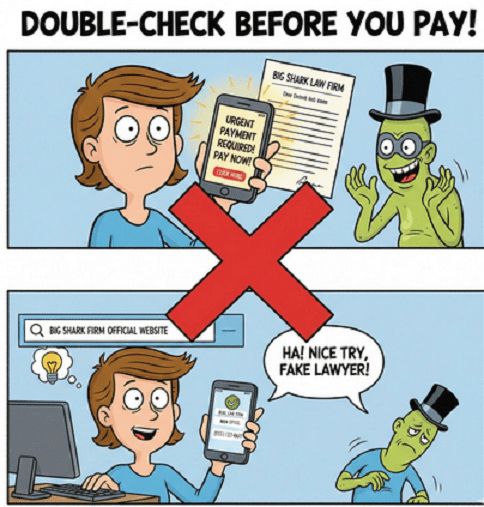
It’s easier than ever for scammers and bad actors to pose as legitimate organizations. One particularly concerning and sophisticated type of fraud involves impersonating law firms.
Whether it’s a letter, an email, or a phone call, any unexpected communication from a law firm—especially one that discusses money, a lawsuit, or sensitive personal information—should be met with a healthy dose of skepticism and verification.
Here is a comprehensive look at why you should always double-check any contact you receive from a law firm and the steps you can take to protect yourself.
The Anatomy of Law Firm Impersonation Scams
Scammers use the authority and credibility associated with the legal profession to their advantage. Their goal is typically to create a sense of urgency, fear, or excitement that overrides your critical thinking.
1. Phishing for Personal Information (P.I.I.)
A scammer might email you, claiming to be a firm handling a debt settlement or estate claim. The email will ask you to “confirm your identity” or “verify your account details” by clicking a link or replying with sensitive information like your Social Security number, birth date, or bank account details.
2. The Urgent Settlement or Payment
Perhaps the most common scam involves a claim that you are either being sued or are due a large financial settlement. They pressure you to pay a “processing fee,” “retainer,” or “tax” immediately to avoid an imminent legal action or to receive your money. Legitimate firms will never demand immediate payment via gift cards, wire transfers, or cryptocurrency.
3. Fake “Demand Letters”
A sophisticated scam might involve a physical letter or email designed to look like a legal demand for payment over an alleged copyright infringement or debt. These letters use intimidating legal jargon and threaten immediate legal action to scare you into quickly sending money.
Three Reasons to Verify Every Contact
1. Law Firms are High-Value Targets for Impersonation
Scammers know that a letter from a lawyer carries weight. By using real firm names and sometimes even copying real letterhead designs, they give their fraudulent communication a veneer of legitimacy that makes people drop their guard and act without thinking.
2. They Can Compromise Real Communication
If you get a legitimate email from a real firm, a scammer might have already sent a fake one. If you act on the fake one, you may be providing your private data to a criminal instead of your legal counsel. The only way to be sure is to confirm the source.
3. Protection Against Identity Theft and Financial Loss
The moment you click a malicious link or provide your bank information, you expose yourself to identity theft and immediate financial loss. A simple five-minute verification process is a small investment compared to the time and stress of recovering from fraud.
A Final Piece of Advice
If a communication demands immediate action, asks for payment in non-traditional ways, or feels “off,” pause. A reputable law firm will always give you time to confirm their identity and will not demand payment under threat of instant legal action. When in doubt, call the official number—and hang up on the fake one.
Awareness is your strongest defense.
Contact us if you’d like more information on how cyber intelligence can help you locate scammers.
Please share this guide with friends and colleagues.